
Housing shortage could stall growth in Gippsland
One Gippsland has warned Gippsland’s growth could stall without urgent government investment in housing and infrastructure.
One Gippsland Chair Cr Nathan Hersey said Gippsland could not fuel its energy, mining, food, fibre and tourism sectors without homes for the workforce.
“Gippsland powers our state, supplies core materials required for infrastructure and feeds Victorians and many Australians. As our industries grow, so too will the workforce,” Cr Hersey said.
“Offshore wind projects slated for Gippsland are expected to create more than 15,000 construction jobs and 7,500 ongoing roles. We need somewhere for these workers to live or else they will simply look for jobs elsewhere,” he said.
Cr Hersey has backed the findings of a state parliamentary inquiry into the supply of homes in regional Victoria.
The inquiry, undertaken by the Legislative Assembly Environment and Planning Committee, found the construction of new housing outside Melbourne was hampered by a range of factors including a lack of shovel ready land.
Cr Hersey, who gave evidence to the committee in Traralgon, backed a recommendation that the Victorian Government provide ongoing strategic investment in rural and regional infrastructure and advocate for the Federal Government to provide matching funding.
“Gippsland is home to more than 270,000 people. With natural beauty, cultural heritage and lifestyle and at the forefront of our nation’s energy diversification, Gippsland is an attractive place to live, work and visit,” Cr Hersey said.
“We can all see Gippsland growing, some of our communities in Baw Baw and Bass Coast shire are amongst the fastest growing in the country.
“Combine this population growth with some of the state’s highest rates of family violence and we know this region is on a path to failing some of the most vulnerable members of our community without action fast.
“We simply can’t open up land to build the homes we need before essential infrastructure such as roads, power, water and sewerage are in place.
“Local government can’t afford to fund this infrastructure itself and wants to partner with the state and federal governments to ensure our region can grow sustainably and thrive,” he said.
Cr Hersey also welcomed the committee’s recommended measures to address the shortage of social and affordable housing.
“Our region has some of the state’s highest rates of family violence and homelessness. The supply of social and affordable housing is not keeping up with demand in Gippsland - and that’s a great concern,” Cr Hersey said.
Cr Hersey said One Gippsland supported many of the report’s recommendations, including that the Victorian Government
update and expand existing regional growth plans, including identifying well-serviced locations in urban areas and new greenfield areas for housing developments;
consider infrastructure funding in the rural and regional context;
help boost the supply of qualified statutory planners in rural and regional Victoria; and
encourage greater adoption of and innovation in modern construction methods.
Cr Hersey said One Gippsland looked forward to working with the State Government to turn the inquiry’s recommendations into real outcomes for Gippsland.
“Gippsland is ready to grow and plan for the future,” Cr Hersey said.
“We want to partner with the State Government to turn these recommendations into action and get the homes built that our region urgently needs now and in the future,” he said.
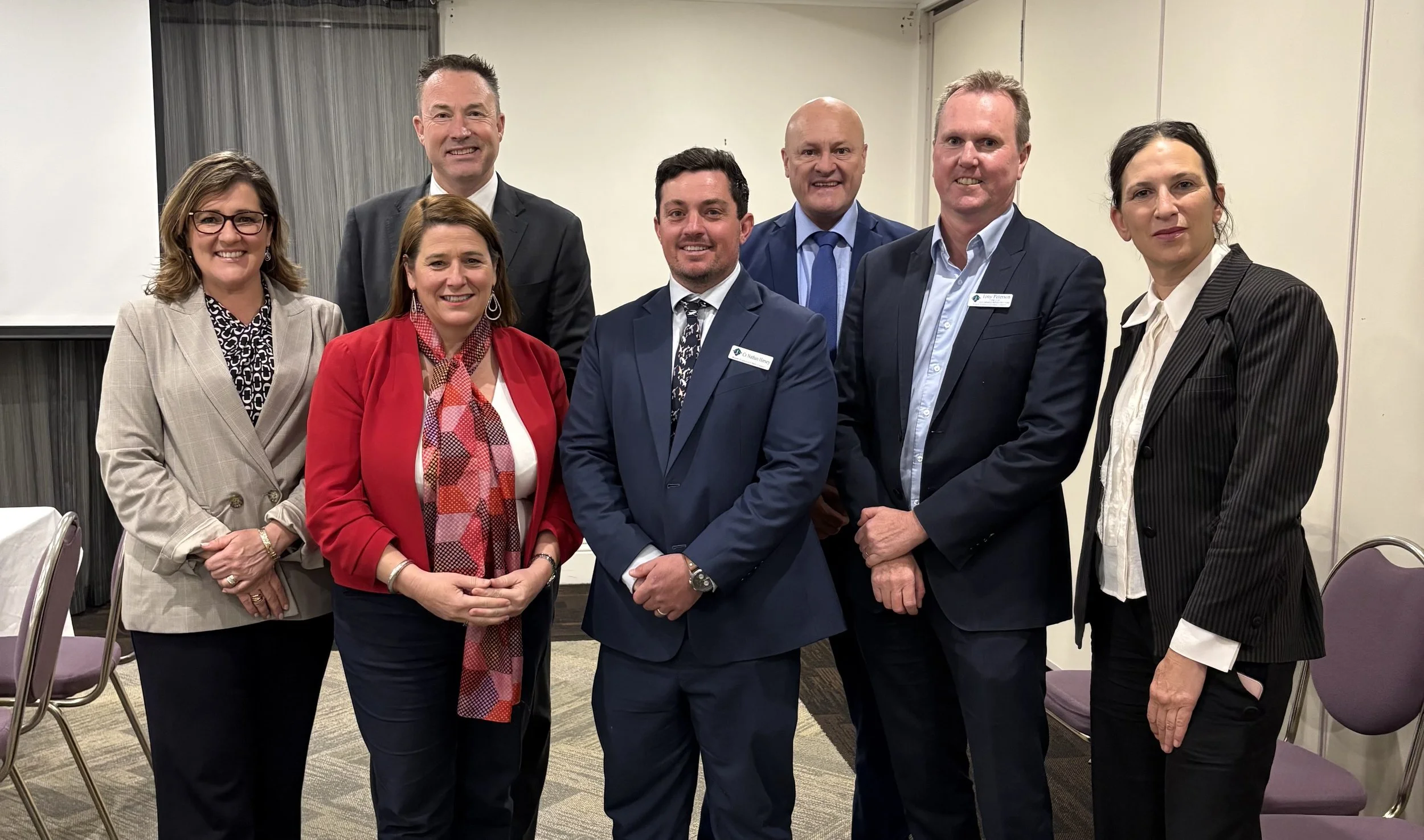
One Gippsland Chair Cr Nathan Hersey (centre) and South Gippsland Executive Director Strategy and Integrity Tony Peterson (second from right) were pictured with members of the Legislative Assembly Environment and Planning Committee during a hearing in Traralgon in May. The committee members are (from left to right) Member for Monbulk Daniela De Martino, Member for Wendouree and Committee Chair Juliana Addison, Member for Morwell and Committee Deputy Chair Martin Cameron (back), Member for Croydon David Hodgett (back), and Member for Bass Jordan Crugnale.